
There’s something magical about perfectly scrambled eggs. When they’re done right, they’re tender, custardy, and almost spoonable—nothing like the dry, crumbly eggs many of us grew up with. The best part? You don’t need fancy equipment or chef-level skills. Just a little patience and a few smart techniques can completely change your breakfast game.
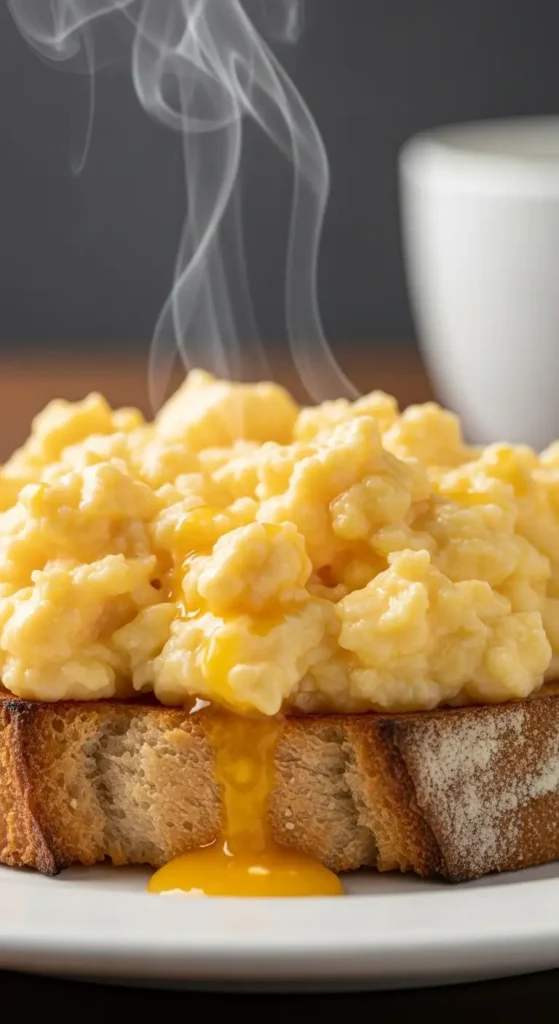
Whether you’re making a quick weekday breakfast or an indulgent weekend brunch, this guide will show you exactly how to cook scrambled eggs that are soft and creamy every single time.
Start With the Right Ingredients
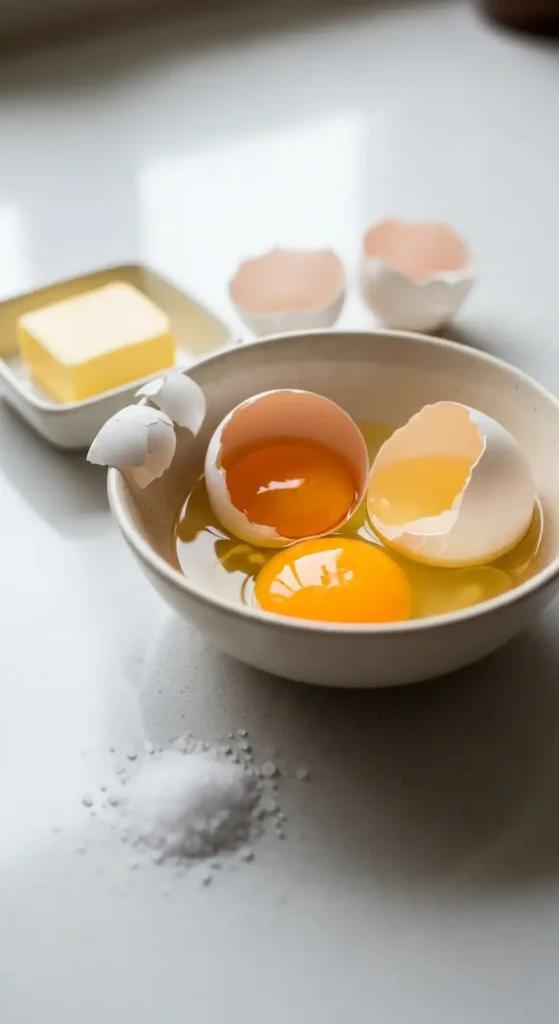
Great scrambled eggs begin before the pan even hits the stove. Using simple, high-quality ingredients makes a noticeable difference in both flavor and texture.
You’ll need:
- Fresh eggs (the fresher, the better)
- Butter (unsalted is ideal)
- Salt (added at the right time)
- Optional: cream, milk, or crème fraîche
Why this matters:
- Fresh eggs have firmer whites and richer yolks.
- Butter adds flavor and helps create a silky texture.
- Dairy is optional, but a small amount can enhance creaminess if used correctly.
Keep it simple. Scrambled eggs don’t need much—just respect the ingredients.
Whisk Gently (But Thoroughly)
Crack your eggs into a bowl and whisk until the whites and yolks are fully combined. You’re not trying to whip in air like a meringue—just blend everything evenly.
Tips for whisking:
- Use a fork or small whisk.
- Stop once the color is uniform.
- Avoid over-whisking, which can lead to a spongy texture.
If you’re adding dairy, now is the time. A tablespoon of cream or milk per two eggs is plenty. Too much liquid can dilute the eggs and make them watery instead of creamy.
Low Heat Is the Secret Weapon
This is where most scrambled eggs go wrong. High heat cooks eggs too fast, forcing out moisture and leaving them dry. Soft, creamy eggs require gentle heat and patience.
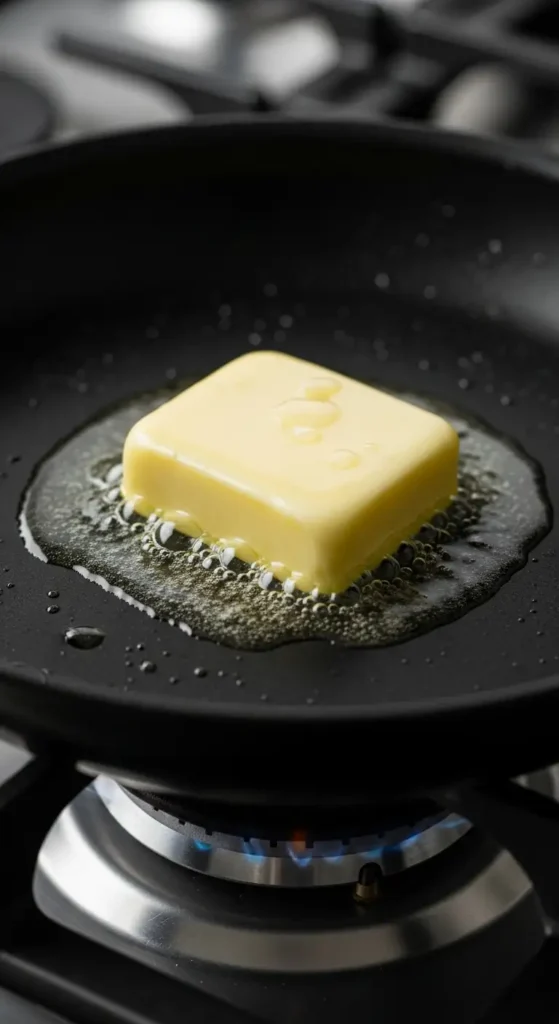
Place a nonstick pan over low heat and add butter. Let it melt slowly without browning.
Why low heat works:
- It cooks the eggs evenly.
- It prevents rubbery curds.
- It allows you to control doneness precisely.
If your pan starts sizzling loudly, the heat is too high. Turn it down.
Stir Slowly and Continuously
Pour the eggs into the pan and immediately begin stirring with a silicone spatula or wooden spoon. Move the eggs gently across the bottom of the pan, scraping as they slowly thicken.
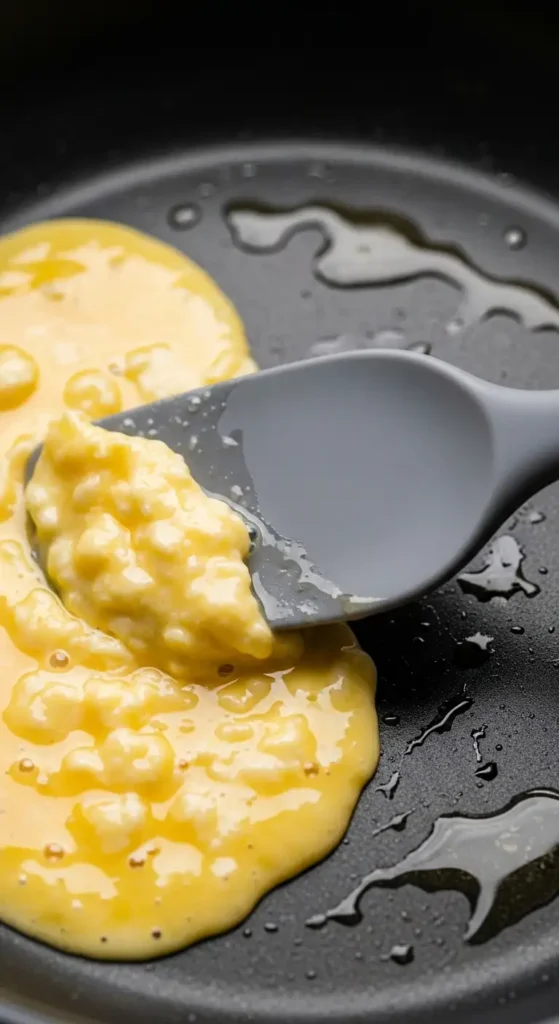
How to stir for creaminess:
- Stir constantly, but slowly.
- Use smooth, sweeping motions.
- Focus on keeping the curds small and soft.
At first, the eggs will look loose and liquid. Then, almost suddenly, they’ll begin to form soft folds. This is the moment to pay close attention—scrambled eggs can overcook in seconds.
Salt at the Right Time
There’s a long-running debate about when to salt scrambled eggs. For soft and creamy results, the sweet spot is just as the eggs begin to set.
Salting too early can draw out moisture. Salting too late can leave the eggs under-seasoned.
Best practice:
- Add salt when the eggs are about 70% cooked.
- Stir gently to distribute evenly.
You can also finish with flaky salt on top for extra texture and flavor.
Remove From Heat Early
This is the final (and most important) step. Take the eggs off the heat while they still look slightly underdone. Residual heat from the pan will finish cooking them.
What to look for:
- Eggs are glossy, not dry.
- Curds are soft and barely holding together.
- No liquid pooling in the pan.
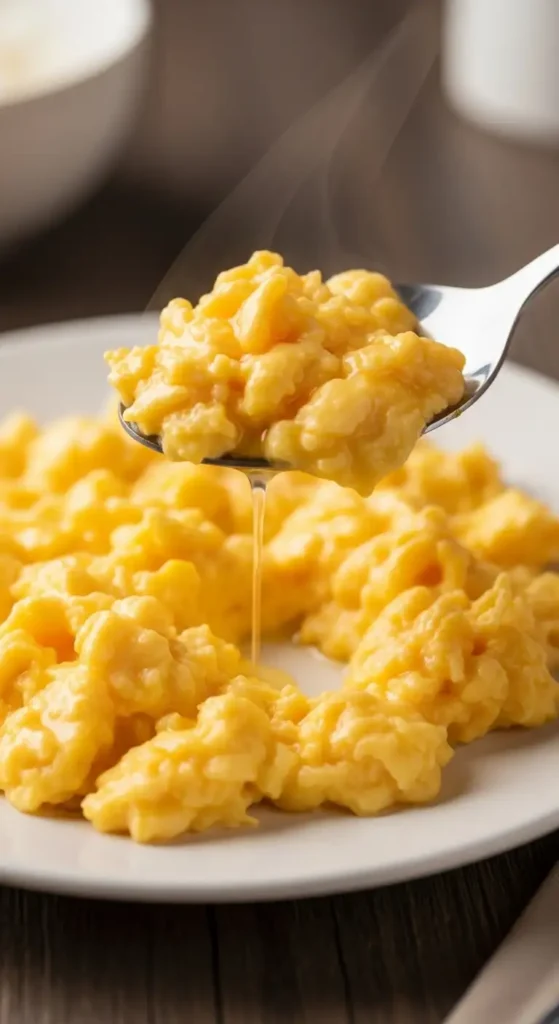
If you wait until they look “done” in the pan, they’ll be overcooked on the plate.
Optional Add-Ins (Less Is More)
Once you’ve mastered the basics, you can experiment—but keep it minimal. Scrambled eggs shine when they’re not overloaded.
Creamy add-ins to try:
- A small dollop of crème fraîche
- Fresh herbs like chives or dill
- A sprinkle of grated cheese (added at the very end)
Avoid watery vegetables or heavy meats unless they’re pre-cooked and well-drained.
Final Takeaway
Soft and creamy scrambled eggs aren’t about fancy tricks—they’re about timing, temperature, and restraint. Low heat, gentle stirring, and pulling the pan early will transform your eggs from ordinary to unforgettable.